

Valentine’s Day has a funny way of making labels feel important.
Suddenly, you are not just “seeing someone”.
You are wondering what to call them.
And in French, that question becomes surprisingly complicated.
Not because French is incredibly precise.
But because it often is not.
French relationship vocabulary relies heavily on implication, context, age, and what is left unsaid. That is why even French people do not always agree on what certain words really mean.
And that is exactly why learners get confused.
So let’s talk honestly about it.

A quick reality check
French relationship words do not follow neat rules.
The same word can mean different things depending on who is speaking, how old they are, and the situation they are in. Native speakers instinctively read these signals. Learners are left trying to decode them.
If you find this confusing, that is not a failure. It means you are paying attention.
Ami and amie: the safest choice
Ami (male) and amie (female) are often the safest words to use.
They usually suggest a deep, long-lasting friendship, especially when paired with context.
Un ami d’enfance
A childhood friend.
Une amie de longue date
A long-time friend.
This is the word many adults choose when they want to make it clear that a relationship is platonic, meaningful, and uncomplicated.
In that sense, ami often feels stronger than copain. It carries emotional weight and shared history.
Copain and copine: flexible, everyday, and ambiguous
Copain and copine are much more flexible, and much more ambiguous.
They are commonly used for:
• friends
• acquaintances
• people you see socially
• everyday connections
This is why someone might message you with:
Coucou ma copine
from one woman to another. Warm, friendly, affectionate, and absolutely not romantic.
In this case, ma copine simply means “my friend”, with closeness and familiarity.
So yes, ma copine can be completely platonic.
And yet.

When possessives change the meaning
This is where things get tricky.
In many contexts, the possessive really does shift the sense of the word.
Une copine
Often means a friend.
But in some situations, une copine can also imply something less exclusive, as in “one of several girlfriends”.
Ma copine
Is very often understood as “my girlfriend”.
And yet, ma copine can still mean “my friend” in friendly messages between women.
So all of these things can be true at once:
• une copine can be a friend
• une copine can suggest non-exclusivity
• ma copine can mean “my girlfriend”
• ma copine can also mean “my friend”
French allows this overlap. It relies on shared cultural understanding to resolve it.
Petit ami and petite amie: technically correct, socially rare
On paper, French gives us:
petit ami and petite amie
In real life, these terms are used far less than learners expect. Many people find them old-fashioned or slightly juvenile.
Younger people may still use:
mon copain or ma copine
to mean boyfriend or girlfriend.
Adults often avoid these labels altogether.
Compagnon and compagne: serious and settled
Compagnon and compagne suggest a long-term, committed relationship.
They are often used when:
• people live together
• they have been together for a long time
• they do not feel the need to define things publicly
These words carry weight and stability.
If someone introduces their compagne, you can assume the relationship is significant.

Chéri, chérie and bébé: terms of affection
Chéri and chérie are extremely common terms of affection.
They are used between partners, but also sometimes within families.
Bonjour maman chérie
Bébé is affectionate, informal, and very dependent on tone and context.
These words are rarely used to introduce someone. They belong in familiar, private moments.
Modern adult workarounds
Many adults avoid labels entirely.
You may hear expressions such as:
mon partenaire
la personne avec qui je suis
Some men will say:
ma femme
even if they are not legally married.
A woman, however, would not say mon mari unless she is married.
Once again, implication and convention matter more than definitions.

So how do French people actually understand all this?
Mostly through:
• age
• tone
• social context
• shared history
• what is not being said
This is why French can feel vague rather than precise, especially to learners who expect one word to equal one meaning.
And it explains why you may hear the same word used in two completely different ways within the same conversation.
Yes. That really happens.

The honest Valentine’s Day takeaway
French relationship vocabulary is not about fixed definitions.
It is about reading the room.
That is why there is no single perfect rule, and why even native speakers will explain things differently.
If you are learning French, using ami or amie for friendship and staying neutral elsewhere is often the safest choice.
And if you feel confused, congratulations! You are understanding French exactly as it is.
Have you ever been unsure what a relationship label meant in French?
You are very much not alone. Feel free to share below.
À bientôt,
Frannie x
Want to go deeper into French love language?
All of this links closely to how the French verb aimer really works, and why it can mean anything from “I quite like” to “I love you deeply”, depending on context.
If you would like to explore that side of things next, you can read my full blog here:
https://soundmorefrench.com/how-to-say-i-love-you-in-french/
A little Valentine’s invitation
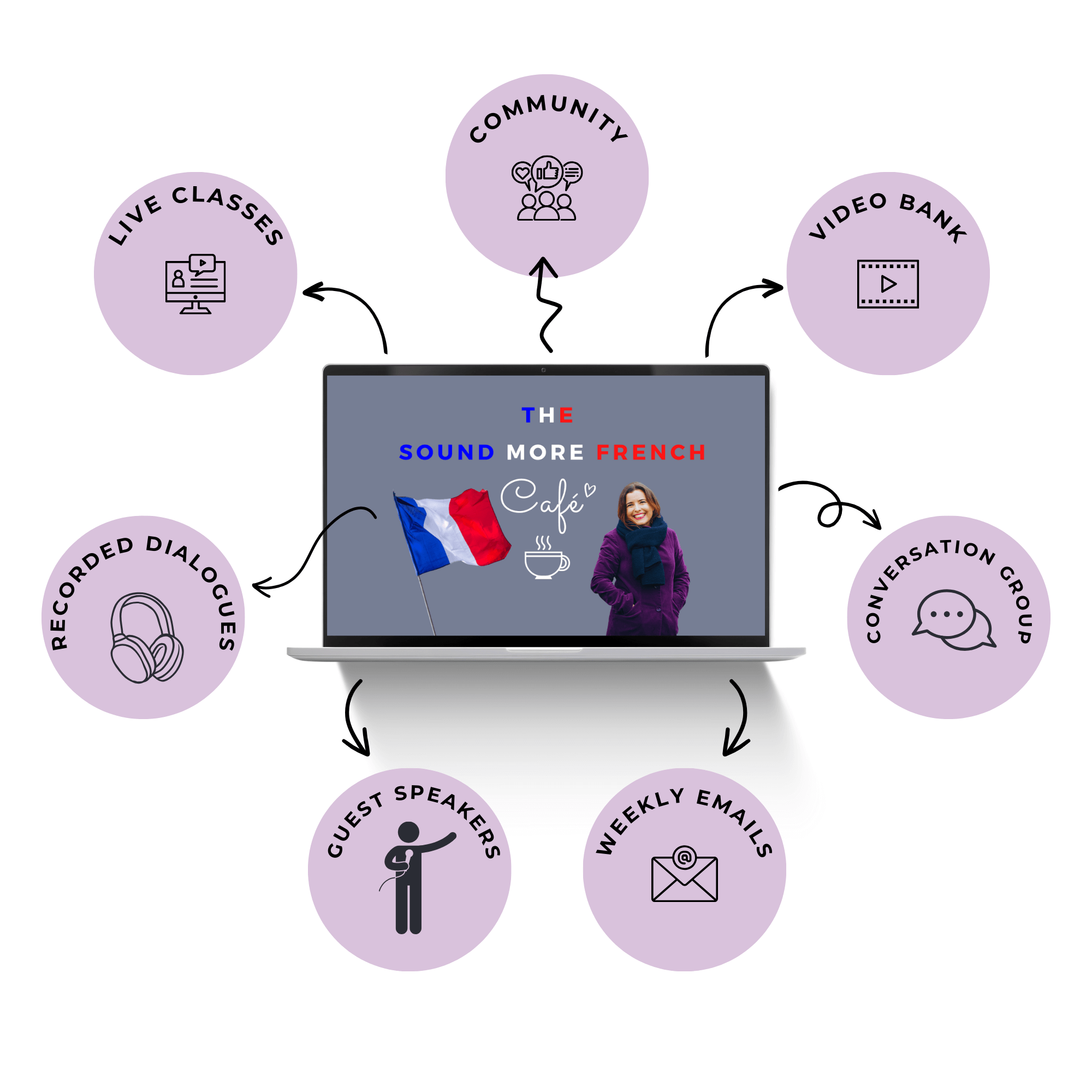
If reading this has reminded you that confidence in French is not about knowing more rules, but about understanding how French is actually used, you might love what we do inside The Sound More French Café.
The Café doors are currently open for a Valentine’s special, and they close this Sunday, 15th February at midnight UK time.
Anyone who joins before the doors close will also receive four Valentine’s bonuses, available exclusively during this opening.
You can find all the details and join us here:
https://soundmorefrench.com/the-sound-more-french-cafe/
If Valentine’s Day has you thinking about connection, confidence, and feeling more at ease in real French conversations, this could be the perfect moment to join us.
À bientôt,
Frannie x
J’adore ce blog -merci Frannie
De rien, Sue ! Et joyeuse St Valentin !