
When France freezes, French gets very specific
If you have stepped outside in France recently and immediately questioned all your life choices, you are not alone.
Freezing mornings. Slippery pavements. Cars wearing suspicious-looking white hats.
Oui… l’hiver est arrivé.
And when the weather turns cold, it is the perfect moment to notice how the French talk about snow.
So let’s wrap up warm and take a little linguistic walk through la neige.

Il neige. The verb you will hear everywhere
When it snows in France, there is one sentence you will hear on repeat:
Il neige.
It’s snowing.
Simple, right? Yet this is one of those phrases learners often hesitate over.
A quick reminder:
-
neiger is always used with il
-
you will hear it constantly in weather forecasts and everyday conversation
Here are a few real-life examples you might recognise:
-
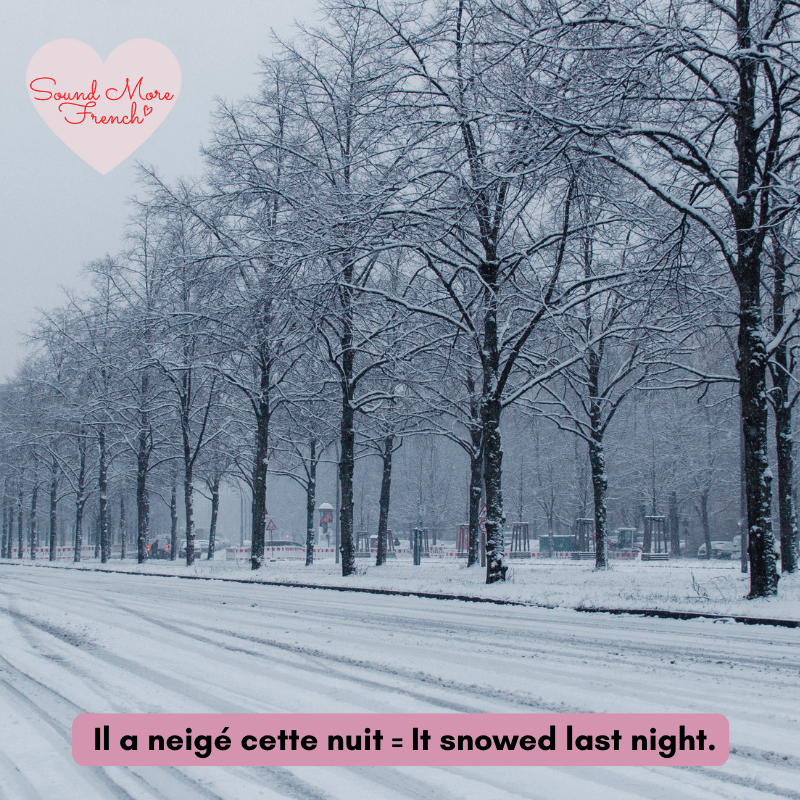
Il a neigé cette nuit.
It snowed last night. -
Il neige encore ce matin.
It’s snowing again this morning. -
Il neigera demain.
It will snow tomorrow.
Once you start listening for it, you will hear il neige everywhere.
Pronunciation rescue: neige
This is one of those French snow vocabulary words that learners love to sabotage, entirely by accident.
neige is pronounced:
NEHZH
A couple of key points:
-
The ei makes an eh sound, not an “ay”
-
The final sound is the soft zh sound, like the s in pleasure
Slow it down, relax the jaw, and resist the temptation to overdo it.
Snow on the ground: what people actually say
Once the snow has stopped falling, French becomes very practical.
You might hear:
-
un tas de neige
a pile of snow -
un amas de neige
an accumulation of snow -
une congère or un banc de neige
snowdrifts or snowbanks
Those last two are especially common in Canada, Switzerland, and Belgium, but you will also hear them in parts of France, particularly mountainous or colder regions.
If you hear them, no need to panic. Just nod knowingly.
Ice, danger, and winter warnings
If there’s one winter word the French take very seriously, it’s this one:
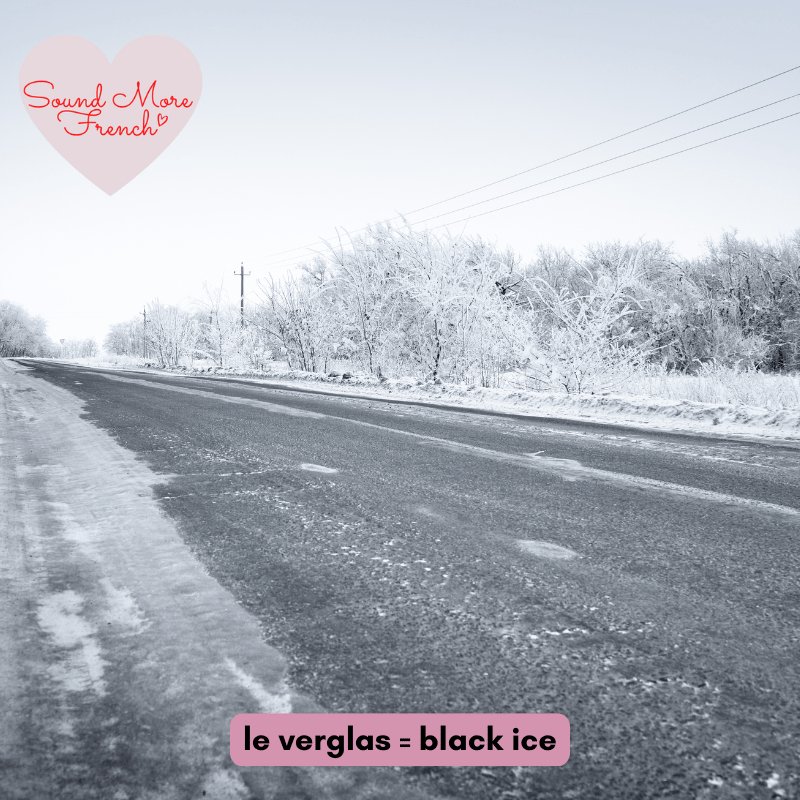
le verglas
black ice
You’ll hear it on the radio, see it on road signs, and feel it underfoot before you see it (always fun!).
And in mountain regions, winter brings another very French phrase:
- chaînes à neige obligatoires
(snow chains required)
A phrase that usually appears after you’ve realised you don’t have any…
The fun stuff, because winter is not all misery
Thankfully, French snow vocabulary is not only about danger and disruption.
There is also:
-
un flocon de neige
a snowflake -
une boule de neige
a snowball -
un bonhomme de neige
a snowman
Proof that even in freezing temperatures, French still leaves room for poetry.
Full French snow vocabulary list
Weather and snowfall
-
la neige
snow -
il neige
it’s snowing -
une chute de neige
a snowfall -
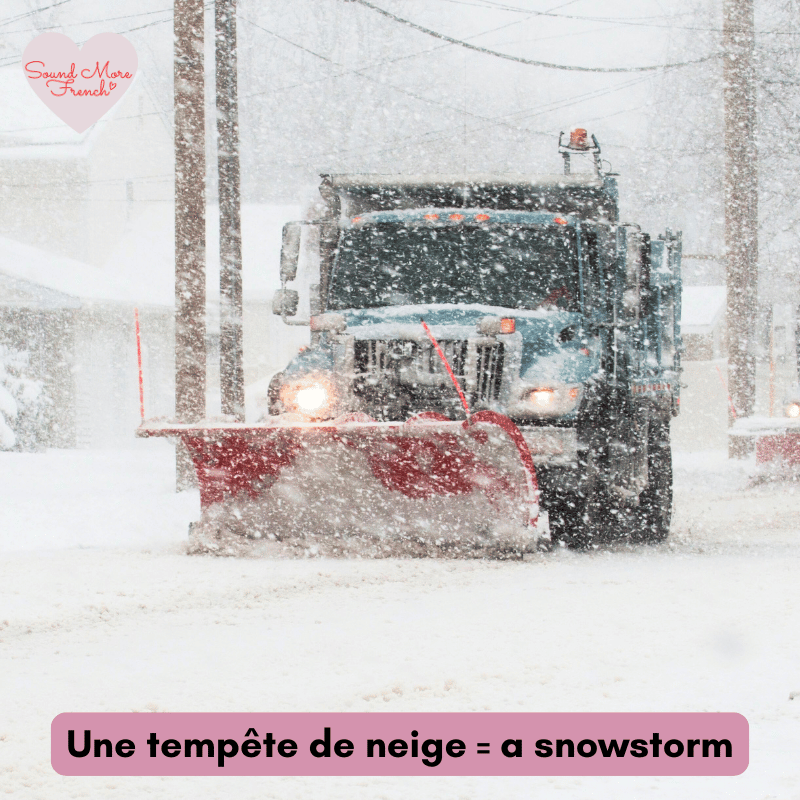
une tempête de neige
a snowstorm -
le grésil
sleet or ice pellets -
la neige fondue
sleet or slush -
la pluie verglaçante
freezing rain
Snow clearing and equipment
-
un chasse-neige
a snowplough -
déneiger
to clear snow -
déblayer
to clear snow or rubble -
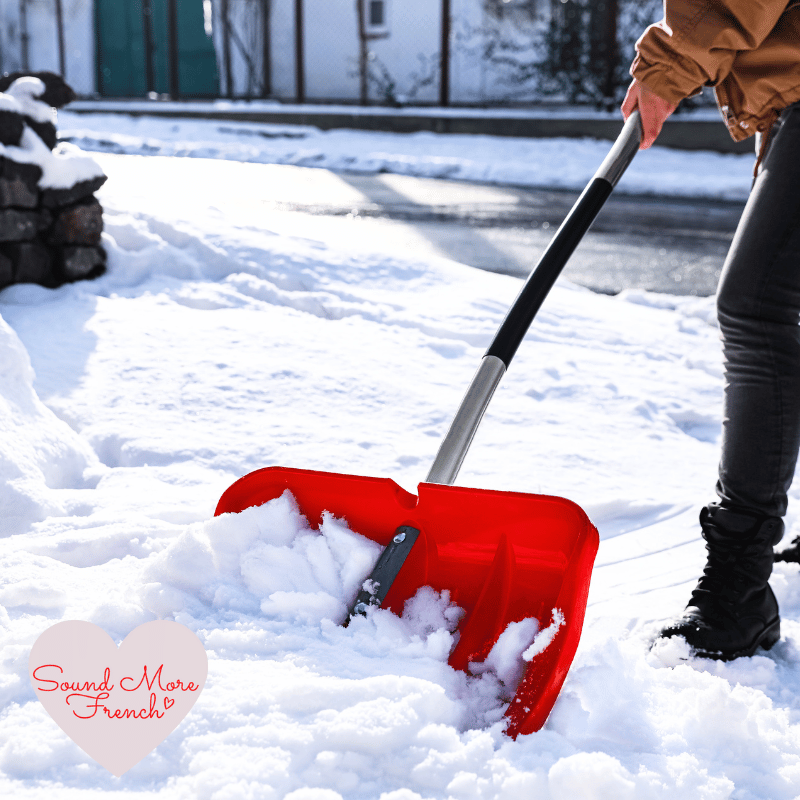
pelleter
to shovel -
une pelle
a shovel -
les pneus neige
snow tyres -
les chaînes à neige
snow chains -
les raquettes
snowshoes
Road and mountain expressions
-
équiper son véhicule de chaînes à neige
to fit snow chains to your vehicle -
chaînes obligatoires / obligation de chaînes
chains required -
routes avec équipements spéciaux obligatoires
roads where special equipment is required
Winter leisure and vehicles
-
une motoneige / un motoski
a snowmobile -
un skidoo / une autoneige
a snowmobile
If you would like more bite-sized French pronunciation tips, you can click to join my mailing list. If you are curious about practising your spoken French in a friendly, supportive space, you can also click on this link to find out more about my membership, The Sound More French Café.
À bientôt,
Frannie x

Join Our Language Learning Community
Remember you’re not alone in your language learning journey. Our vibrant community of learners is always here to support you. Join us in our free Facebook group Sound More French with Frannie, to share tips, ask questions, and connect with like-minded learners.
Recent Comments